

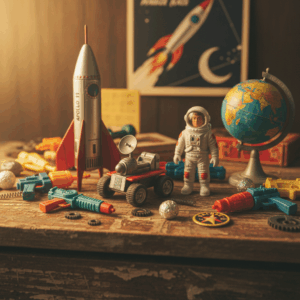
Unearthing Space Race Toys: History, Design, Cultural Impact
The Space Race, a fervent period of scientific discovery and human ambition, profoundly influenced toy manufacturing. These iconic Space Race toys captured the public's imagination, mirroring the era's fascination with rocketry, astronauts, and lunar exploration. Indeed, collecting these nostalgic items has become incredibly popular. Collectors often find these pieces represent a tangible link to a pivotal moment in history. Understanding the factors driving their collectibility, from design evolution to cultural resonance, offers valuable insights for enthusiasts. This article delves into the fascinating world of Space Race toys, exploring their historical context, design characteristics, and enduring appeal.
Evolution of Space Age Playthings
Early Designs and Manufacturing Origins
The initial wave of Space Race toys emerged in the late 1940s and early 1950s. These early designs often depicted fantastical rocket ships and ray guns. Manufacturers quickly adapted their production lines to meet the burgeoning demand. Furthermore, many early pieces showcased simpler constructions, frequently utilizing pressed metal and basic plastics. Notable among these were toys inspired by Flash Gordon and Buck Rogers, which provided a foundation for later, more realistic designs. The materials and techniques used during this period reflect the manufacturing capabilities of the post-war era. For instance, Buddy L produced robust steel rockets, reflecting earlier automotive toy methods.
Design Innovation and Cultural Reflection
As the Space Race intensified through the 1960s, toy designs evolved significantly. Manufacturers began incorporating greater realism into their products. Space capsules, lunar landers, and astronaut figures became increasingly detailed. These toys directly mirrored real-world events, such as the Sputnik launch in 1957 and the Apollo 11 moon landing in 1969. Consequently, companies like Marx Toys and Ideal Toy Company released comprehensive playsets. These sets often included launch pads, control centers, and various space vehicles. The shift in design illustrates the public's growing familiarity with actual space technology. The Strong National Museum of Play offers further context on the historical development of space-themed toys.
Market Dynamics and Collector Appeal
Understanding Current Market Trends
Collector interest in Space Race toys has grown dramatically in recent years. This increased demand stems from several factors. Nostalgia plays a significant role, as many collectors seek to reconnect with their childhood memories. Additionally, the finite supply of well-preserved examples contributes to their desirability. Rarer pieces, particularly those from smaller production runs, inherently attract greater attention. The market shows a consistent appreciation for items still in their original packaging. Sealed examples, therefore, often command premium values, reflecting their pristine condition and completeness.
Key Factors in Collectibility
Several elements determine the collectibility of these vintage items. Condition remains paramount; pieces exhibiting minimal wear or damage are highly sought after. Rarity is another critical factor; toys produced in limited quantities or those that rarely survived tend to be more valuable. Historical significance also plays a crucial role. For example, toys directly associated with major space milestones, like the Apollo program, often hold increased appeal. Furthermore, the originality of parts and accessories significantly impacts value. Collectors typically prioritize complete and authentic examples. Collectors Weekly provides additional insights into collector focus areas.
Authentication and Preservation Strategies
Identifying Authentic Space Race Toys
Identifying genuine vintage Space Race toys requires careful examination. Collectors should scrutinize manufacturing marks, copyright stamps, and material composition. Reproductions often differ in plastics, paint finishes, or mold details. Observing the weight, texture, and smell can also provide clues, as vintage plastics and metals have distinct characteristics. For instance, original plastic ray guns from the 1950s often used materials like cellulose acetate, which can show signs of degradation over time. Furthermore, comparing potential acquisitions with documented examples in collector guides proves invaluable.
Strategic Collecting and Preservation
Building a strong collection requires research, patience, and a passion for the hobby. Collectors should prioritize authenticity and condition. Consequently, understanding common restoration techniques helps differentiate original pieces from those that have been repaired or repainted. Proper preservation is essential for maintaining the value and integrity of these historical artifacts. Storing items away from direct sunlight, extreme temperatures, and high humidity prevents further degradation. Acid-free storage materials, such as archival boxes and polyethylene bags, offer excellent protection. Focusing on provenance, or the item's history of ownership, adds another layer of collectibility.
Conclusion
Space Race toys offer a captivating window into a transformative era. Their evolution reflects both technological advancements and cultural shifts. Understanding their historical context, design nuances, and market dynamics empowers collectors to make informed decisions. The enduring appeal of these vintage playthings underscores their significance beyond mere toys; they are cultural touchstones. By focusing on authenticity, condition, and rarity, enthusiasts can build meaningful collections that celebrate humanity's enduring fascination with space. Happy collecting!