

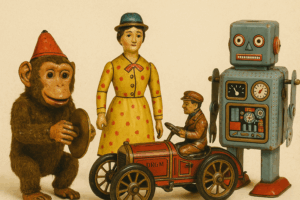
Uncovering Mechanical Toy Innovators: A Historical Perspective
The intricate world of early mechanical toys offers a fascinating glimpse into the ingenuity of past inventors and artisans. These clever devices, often powered by springs or clockwork mechanisms, represent a pivotal moment in toy manufacturing history. Understanding their origins and evolution provides valuable insights for collectors and enthusiasts. Furthermore, these toys often reflected the technological advancements and cultural fascinations of their respective eras. Their enduring appeal stems from a blend of nostalgic charm and mechanical marvel. Collectors often seek out well-preserved examples, eager to appreciate their meticulous craftsmanship.
The Genesis of Clockwork Wonders
The concept of automated figures dates back centuries. However, the accessible mechanical toy truly began to flourish in the 19th century. Early innovators applied principles of horology to create miniature moving spectacles. These pieces often mimicked human or animal actions with remarkable precision.
Early Manufacturing Hubs and Techniques
European nations, particularly France and Germany, became centers for mechanical toy production. French manufacturers like Roullet & Decamps crafted exquisite automata, renowned for their lifelike movements. German firms, including Lehmann and Bing, pioneered more mass-produced yet still intricate tinplate toys. These early pieces featured hand-painted details and robust clockwork mechanisms. Manufacturing techniques evolved from individual craftsmanship to more standardized assembly lines. The Victoria and Albert Museum offers extensive examples of these early works. Collectors should always examine the construction quality and original finishes.
Identifying Authenticity in Early Pieces
Identifying genuine early mechanical toys requires careful observation. Original pieces often bear discreet manufacturing marks or patent numbers. Furthermore, the materials used, such as tinplate, cast iron, and specific types of fabric, provide clues. Reproductions typically lack the fine details and patina of age found on authentic examples. Scrutinizing the winding keys and internal mechanisms can also help verify a toy's vintage. These components often show wear patterns consistent with historical use.
Market Dynamics and Collectibility Factors
The market for early mechanical toys shows consistent interest. Collectors are drawn to their historical significance and display potential. Rarity, condition, and provenance remain primary drivers of value.
Current Market Insights
Collector interest has grown significantly for well-preserved examples of clockwork automata. Similarly, early tinplate toys from renowned manufacturers attract considerable attention. This increased demand often stems from a convergence of nostalgia cycles and the finite supply of surviving pieces. Toys depicting popular themes or historical events tend to be particularly sought after. The intricate movements and charming presentation contribute significantly to their desirability. The Antique Toy Collectors of America provides further resources on market trends.
Strategic Collecting Recommendations
Building a strong collection of mechanical toys requires patience and research. Prioritize condition, as fully functional and aesthetically complete examples are often scarce. Collectors should also consider the completeness of a toy, including original boxes or accessories. These additions can significantly enhance an item's appeal. Furthermore, understanding the key manufacturers and their signature styles helps in informed acquisitions. Authenticity checks are paramount to avoid acquiring later reproductions.
Advanced Knowledge for Discerning Collectors
Delving deeper into mechanical toys reveals nuances critical for serious collectors. Authentication methods and understanding variants become essential tools.
Authentication and Variant Identification
Detailed authentication involves examining not just external characteristics but also internal mechanisms. Identifying original mechanisms, specific gear configurations, and spring types is crucial. Many early toys had subtle variations in design or color schemes over their production runs. Recognizing these variants can highlight rarer examples. Roullet & Decamps automata, for instance, often had slight costume changes across different production batches. Knowledge of typical material degradation, such as paint crazing or corrosion patterns, aids in distinguishing genuine age from artificial aging.
Long-Term Collecting Strategy and Preservation
A sustainable collecting strategy includes a strong emphasis on preservation. Mechanical toys require specific care to prevent further degradation. Proper storage in climate-controlled environments is essential to protect delicate mechanisms and finishes. Avoid overwinding fragile clockwork motors, which can cause irreparable damage. Moreover, documenting a toy's history and provenance adds to its long-term value. This includes records of previous ownership or exhibition.
Embracing the Legacy of Mechanical Innovation
The enduring appeal of early mechanical toys lies in their remarkable blend of art and engineering. These forgotten innovators crafted more than mere playthings; they created miniature works of moving art. Understanding their history, the market dynamics, and authentication techniques enhances the collecting experience. Collectors who prioritize research, preservation, and authenticity build truly meaningful collections. Furthermore, these historical artifacts offer a tangible link to yesteryear's technological wonders. Continue exploring the rich tapestry of vintage toys, appreciating the ingenuity that brought them to life.