
Hasbro: Toy Empire's History & Nostalgic Evolution
Welcome, fellow collectors! Our journey through playland today explores the fascinating legacy of Hasbro: Toy Empire's History & Nostalgic Evolution. This company isn't just a toy manufacturer; it's a cornerstone of childhood memories for generations. Furthermore, Hasbro's innovations and iconic creations have profoundly shaped the toy industry. Indeed, we'll delve into its humble beginnings, its most beloved products, and its lasting cultural impact. Prepare for a delightful trip down memory lane!
From Pencil Boxes to Playthings: Hasbro's Early Years
The story of Hasbro Inc. began in 1923. Three brothers, Henry, Hillel, and Herman Hassenfeld, founded Hassenfeld Brothers in Providence, Rhode Island. Initially, they focused on textile remnants. Soon after, they expanded into pencil boxes and school supplies. This early diversification proved wise. Moreover, the company’s ingenuity quickly adapted to market needs.
The Dawn of Hassenfeld Brothers Toys
By the 1940s, Hassenfeld Brothers ventured into toys. Their first offerings included doctor and nurse kits. These simple sets captured children's imaginations. Furthermore, the company developed modeling clay. This early success laid vital groundwork. The brothers understood the power of imaginative play.
Post-War Expansion and Key Innovations
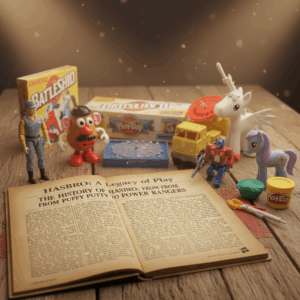
The post-World War II era brought massive growth. In 1952, they introduced Mr. Potato Head. This revolutionary toy was the first to be advertised on television. Its popularity soared immediately. Children loved rearranging its funny features. Consequently, this innovation cemented Hasbro's place in the toy world. You can learn more about its impact on TV advertising here.
Iconic Creations: Toys That Define Generations
Hasbro continued its ascent with a string of unforgettable toys. The company formally adopted the Hasbro name in 1968. This marked a new era of global recognition. Their portfolio grew steadily. Many of these toys remain beloved classics today.
The Rise of G.I. Joe
In 1964, Hasbro launched G.I. Joe. He wasn't just a doll; he was an "action figure." This term redefined toys for boys. G.I. Joe reflected American heroism. He came with various uniforms and accessories. Consequently, G.I. Joe became an instant sensation, appealing to countless children.
Strategic Acquisitions and Board Game Dominance
Hasbro's strategic vision included acquisitions. In 1984, they acquired Milton Bradley Company. This brought Pictionary, The Game of Life, and Twister into their fold. Thus, Hasbro became a powerhouse in the board game market. Later, in 1991, they acquired Parker Brothers. This added Monopoly and Clue to their impressive lineup. These moves solidified Hasbro's market leadership. For more history on board games, visit The Strong National Museum of Play.
Modern Era & Enduring Nostalgia
Today, Hasbro remains a dominant force. They continue to innovate while honoring their classic origins. Their brands evoke strong nostalgia. Moreover, they consistently introduce new products. This balance keeps the company relevant.
Transformers and My Little Pony
The 1980s saw the birth of Transformers. These "robots in disguise" captivated children worldwide. Likewise, My Little Pony offered friendship and magic. Both lines spawned successful animated series and films. They remain cornerstone franchises for Hasbro. These brands continue to thrive with new iterations.
Digital Evolution and Future Horizons
Hasbro has also embraced the digital age. They develop video games and digital experiences. Furthermore, they license their intellectual property widely. The company continually seeks new ways to engage audiences. Its rich history guarantees a bright future. Hasbro's enduring appeal spans generations.
A Legacy of Play and Imagination
Hasbro's journey is a testament to imagination and innovation. From humble beginnings, it built a toy empire. Its products sparked countless hours of play. They fostered creativity in children worldwide. Furthermore, Hasbro's cultural impact is undeniable. The company truly defined what it means to be a toy giant. So, what was your favorite Hasbro memory? Let us know below!