
When people think of vintage Barbie, they often picture the early dolls from the 1960s. Those are indeed significant, but there’s a strong and growing interest in Barbies from the 1980s and 1990s. These dolls often represent a sweet spot for collectors: they’re old enough to feel nostalgic, but new enough that many survived in good condition, sometimes still in their boxes. This era also saw a huge variety of dolls and themes, making it an exciting field to explore.
We find that collectors in Cyprus, Greece, and the UK are particularly drawn to dolls that evoke specific memories or were part of popular lines. It’s not always about rarity; sometimes it’s about the emotional connection or the distinct styling that defines the period.
The Superstar era Barbie dolls
The 1980s kicked off with the ‘Superstar’ face mould, first introduced in 1977. This look defined Barbie for over a decade. She had a wide, open-mouthed smile, often with painted teeth, and big, side-glancing eyes. Her hair was frequently styled in big, voluminous waves or curls, reflecting the popular hairstyles of the time. These dolls are instantly recognisable as 80s Barbie.
Dolls like ‘Day-to-Night Barbie’ (1985) are popular because they represent a classic career-focused Barbie, with an outfit that transformed from business attire to evening wear. ‘Peaches ‘n Cream Barbie’ (1984) is another favourite, known for her elaborate gown and elegant appearance. While not exceptionally rare, dolls in excellent condition, especially with their original accessories, are always sought after. The condition of the hair is particularly important for these dolls, as the elaborate styles can easily become messy over time.
The 1990s: diversity and themed collections
The 1990s brought a shift in Barbie’s look and marketing. While the Superstar face continued for a while, new face moulds emerged, and there was a greater emphasis on themed dolls and collector series. The ‘Mackie’ face mould, introduced in 1991, became very popular, featuring a more sculpted look and often a closed-mouth smile. This is the face you’ll see on many of the designer and collector edition Barbies from the mid-90s onwards.
‘Totally Hair Barbie’ (1992) is probably one of the most iconic dolls of the decade. Her extra-long, crimped hair was a huge selling point, and she remains a favourite among collectors who remember her from their childhood. Finding one with her hair still in good condition and with her original accessories, like the styling gel and hair clips, is a definite plus. Similarly, ‘Holiday Barbie’ dolls, which started in 1988, became an annual tradition and are a distinct category for collectors. The earlier Holiday Barbies, particularly from the late 80s and early 90s, tend to hold more value, especially if they are in their original, unopened boxes.
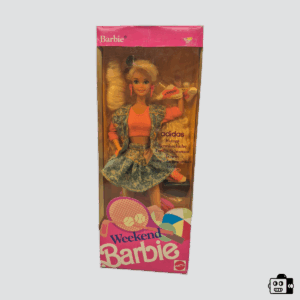
Sports and career Barbies from the 90s also have their fans. We have a ‘Weekend Barbie Doll in Adidas Hi-Tops’ in the shop right now, for example, which is a great example of a themed doll from this period, complete with distinctive fashion. You can find her and other interesting pieces on our Dolls category page.
What makes a 80s or 90s Barbie desirable?
It’s not just about the doll itself; several factors contribute to a Barbie’s collectibility:
- Condition: This is paramount. Mint in Box (MIB) or Never Removed From Box (NRFB) dolls command the highest prices. For out-of-box dolls, look for clean faces, intact original makeup, and hair that hasn’t been cut or overly restyled.
- Originality: Dolls with their complete original outfits, shoes, and accessories are always more valuable. Missing a single earring or a small handbag can affect the price.
- Rarity or limited editions: While many Barbies from this era were mass-produced, some limited edition or regional exclusive dolls can be harder to find.
- Nostalgia: For many, collecting is about reliving childhood. Dolls that were particularly popular or memorable often have a strong following regardless of their initial rarity.
- Unusual features or themes: Dolls that were a bit different, like those with unique mechanisms (e.g., colour-changing features) or very specific themes, can attract interest.
Always check for common issues like green ear (a reaction between the vinyl and metal earrings), neck splits, or faded clothing. Even a doll in its box can sometimes have these issues if stored poorly.
Collecting 1980s and 1990s Barbies offers a wide range of opportunities, whether you’re looking for a specific childhood memory or a well-preserved piece of toy history. Keep an eye on our shop and online auctions for interesting finds.